
Sat - Thu 9.00 AM - 6.00 PM
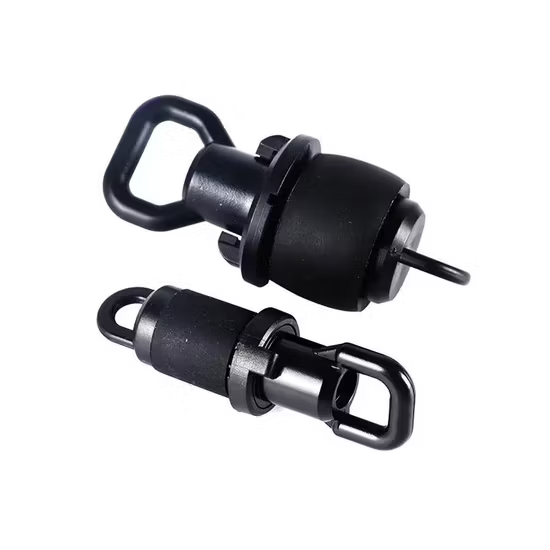
Duct End Plug 25mm
Saudi Ducts > Duct End Plug 25mm
Duct End Plug 25mm
Premium Cable & Conduit Sealing Plug for Telecom, Power & Infrastructure Projects in KSA & GCC
Infrastructural development has been the backbone of underground networks keeping to the surface in Saudi Arabia (KSA) and the Gulf countries, which have also become integral elements of a modern-day utility infrastructure. Furthermore, the underground ducts for power distribution, communication, and fiber optic network penetration along with control cables and sensor wires are becoming the favorite from the perspective of utilities operators and managers because the disadvantages that come with the conduits above the ground like fire hazards, theft, and lack of beauty are totally eliminated.
Moreover, on the other hand, it is necessary to always use a 25mm duct end plug for every installation, while the process of cable pulling, and for maintenance activities as well to keep the ducts fresh and secure. Duct End Plug 25mm is a small device but a device that plays a very significant role in sealing off openings of 25mm diameter in ducts, and thus maintaining the cleanliness and safety of the duct environment until it’s time for passing the cables through or opening the service lines.
The Duct End Plug 25mm is a purpose‑designed sealing device used to temporarily or permanently seal the open end of a duct or conduit with a 25mm inside diameter. This plug acts as a physical barrier that prevents the entry of water, dust, sand, debris, rodents, insects, and other contaminants that can negatively impact cable installation and long‑term performance.
Constructed from durable polymers such as HDPE (High‑Density Polyethylene), PVC (Polyvinyl Chloride), or elastomeric rubber (EPDM), the duct end plug ensures a tight, reliable seal that withstands underground pressures, moisture, and environmental stresses characteristic of the Gulf’s varied terrains — from desert landscapes to coastal saline soils.
Whether used during staged cable deployment, temporary infrastructure work, or final network sealing, the Duct End Plug 25mm is an essential part of any professional utility installation in telecom, fiber, power, signaling, sensor, and control systems
Infrastructural development has been the backbone of underground networks keeping to the surface in Saudi Arabia (KSA) and the Gulf countries, which have also become integral elements of a modern-day utility infrastructure. Furthermore, the underground ducts for power distribution, communication, and fiber optic network penetration along with control cables and sensor wires are becoming the favorite from the perspective of utilities operators and managers because the disadvantages that come with the conduits above the ground like fire hazards, theft, and lack of beauty are totally eliminated.
Moreover, on the other hand, it is necessary to always use a 25mm duct end plug for every installation, while the process of cable pulling, and for maintenance activities as well to keep the ducts fresh and secure. Duct End Plug 25mm is a small device but a device that plays a very significant role in sealing off openings of 25mm diameter in ducts, and thus maintaining the cleanliness and safety of the duct environment until it’s time for passing the cables through or opening the service lines.
The Duct End Plug 25mm is a purpose‑designed sealing device used to temporarily or permanently seal the open end of a duct or conduit with a 25mm inside diameter. This plug acts as a physical barrier that prevents the entry of water, dust, sand, debris, rodents, insects, and other contaminants that can negatively impact cable installation and long‑term performance.
Constructed from durable polymers such as HDPE (High‑Density Polyethylene), PVC (Polyvinyl Chloride), or elastomeric rubber (EPDM), the duct end plug ensures a tight, reliable seal that withstands underground pressures, moisture, and environmental stresses characteristic of the Gulf’s varied terrains — from desert landscapes to coastal saline soils.
Whether used during staged cable deployment, temporary infrastructure work, or final network sealing, the Duct End Plug 25mm is an essential part of any professional utility installation in telecom, fiber, power, signaling, sensor, and control systems
What Is a Duct End Plug 25mm?
The Duct End Plug 25mm is a small part but with a very efficient function that the purpose of which is to stop the duct opening of a pipe of 25 mm from getting any outside elements in it. During the whole cable laying or even in case of maintenance, it will prevent any unwanted substances from getting into the duct.
The plugs are absolutely not the same as regular screws or any other temporary blocking means, they are exactly the same size, purpose, and testing for the toughness and performance needed in the underground utility system.
The main types of ducts that can be applied to the said cause are:
- Fibre optic micro‑ducts
- Telecommunication lines
- DUCTS FOR SMALL POWER CABLES
- SIGNAL AND CONTROL LINES
- CABLES FOR SENSORS AND MONITORING
- Protection of utility corridor
Why Duct End Plugs Matter in Underground Utility Projects
1. Moisture Ingress
Water entering a duct can degrade cable jackets, increase friction during pulling, and lead to corrosion or short circuits.
2. Dust & Debris
Sand and soil particles can obstruct cable pulls or damage cable insulation.
3. Rodent & Insect Entry
Small animals and insects often seek shelter underground and can chew through cables.
4. Soil & Chemical Contamination
Soil moisture, salts, or chemicals can reduce cable lifetime and performance.
5. Installation Delays
Unsealed ducts complicate cable pulling and inspection tasks.
Installing a Duct End Plug 25mm prevents these issues by providing a secure, clean, and protected duct end — vital for utility network quality and reliability.
Material & Manufacturing Characteristics
The Duct End Plug 25mm is manufactured using industrial‑grade materials selected for strength, flexibility, sealing performance, and long‑term durability.
Common Materials:
High‑Density Polyethylene (HDPE):
Excellent moisture resistance
Performs well in burial conditions
Long service life
Polyvinyl Chloride (PVC):
Good structural strength
Effective in dry and moist soils
Elastic Polymer / EPDM Rubber:
High compression and sealing ability
Reusable designs with compression features
Manufactured by injection molding or precision forming, each plug is engineered to fit securely with minimal play, ensuring a tight, consistent seal throughout its service life.
Technical Specifications – Duct End Plug 25mm
| Specification | Detail |
|---|---|
| Product Name | Duct End Plug 25mm |
| Duct Size | 25 mm inner diameter |
| Material | HDPE / PVC / Elastomeric Rubber |
| Color | Black / Natural Polymer |
| Operating Temperature | –20°C to +80°C (material dependent) |
| Seal Type | Push‑fit / Compression / Threaded |
| UV Resistance | Yes |
| Chemical Resistance | High (soil salts, moisture) |
| Reusability | Yes (depending on model) |
| Compliance | Relevant utility standards (ISO / ASTM) |
| Applications | Telecom, fiber, power, signaling ducts |
How Duct End Plug 25mm Is Used
Installation Procedure
Prepare the Duct Opening
Duct end of 25mm should be cleaned and squared (no jagged edges or leftovers).
Verify Plug Size
Confirm that the plug is suitable for 25mm ID duct - the incorrect sizing might result in sealing the lay.
Check Plug Condition
Inspect the plug before use for defects or deformation.
Apply Lubricant (If Provided)
Plug insertion may be made easier with a little bit of lubricant that is manufacturer-approved.
Insert the Plug
Place the plug in the duct until it is fully seated. For threaded or locking types, they should be turned or snapped as per the instructions.
Verify Seal
The plug should be checked for level positioning and tightness to provide the required protection.
Backfill and Compact (if trenching)
Soil should be backfilled and compacted according to project specifications after the sealing operation.
Re‑Entry for Cable Deployment
Duct end plugs are designed for easy removal when the cables are to be installed. You might use the following methods for their removal:
- Twist release
- Pull tab
- Lever release
- Tool-assisted extraction
Once the cables are pulled, the plug can be either reinstalled or replaced with a permanent closure.
Types & Design Variants of 25mm End Plugs
Different job requirements call for different plug designs. Below are common variants:
1. Push‑Fit End Plugs
Quick, no tool installation
Good for temporary and permanent sealing
Ideal for staged deployments
2. Threaded End Plugs
Secure mechanical fit
Suitable where slight internal duct pressure may occur
3. Compression Seal Plugs
Uses an internal gasket or O‑ring
Excellent moisture exclusion
4. Locking / Snap‑In Plugs
Retains position even under vibration or soil movement
Good for high‑activity utility corridors
5. Reusable End Plugs
Designed for multiple installations
Useful when duct openings are repeatedly used for cable pulls
Why High‑Quality End Plugs Are Essential in Gulf Conditions
The environment of the Gulf region poses distinct difficulties:
Very Warm Ambient Conditions
Metals and plastics could face problems — thus the need for choosing materials with stable temperatures.
Soil Profiles with Salinity and Chemicals
Salty soils are frequently found in the coastal regions of the UAE, Qatar, and Kuwait and the eastern part of Saudi Arabia; thus, plugs need to be rust-free and non-porous.
Fine Sand Soils
If ducts are not properly sealed, fine sand particles may infiltrate very quickly.
Groundwater Presence at Times
Areas susceptible to flooding need to be sealed with moisture-proof material.
Duct end plugs that are high-performance quality and made of HDPE or elastomeric polymers provide reliable protection for the infrastructure in these environments.
Applications of Duct End Plug 25mm in KSA & GCC Infrastructure
The 25mm duct end plug is a versatile utility product used in:
1. Fiber Optic Network Deployment
Protects micro‑ducts prior to fiber pulling operations.
2. Telecommunications Conduits
Seals empty telecom conduits until cables are installed.
3. Low‑Voltage Power Ducts
Used where small power or control cables are staged.
4. Signaling & Control Systems
Useful in industrial plants and roadway signal ducts.
5. Smart City Networks
Applied in sensor conduit networks and IoT data links.
6. Data & Security Cable Channel Protection
Guards low‑voltage security wiring or data conduits during staged installation.
7. Industrial Automation & Control
Protects control wiring conduits in factories and processing plants.
Benefits of Using Duct End Plug 25mm
1. Prevents Moisture Entry
Ducts stay dry, and the moisture won’t cause any damage to the cables.
2. Reduces Debris Infiltration
Blocks every kind of dirt: sand, dust, soil, and construction.
3. Enhances Cable Pulling Ease
Less friction and faster pulls are needed for the duct that is clean and protected.
4. Rodent & Pest Exclusion
The physical barrier strengthens the protection of cables against rodent’s chewing and insect’s munching.
5. Cost‑Effective Protection
An inexpensive solution that keeps the cost of cable damage at a minimum.
6. Quick, Tool‑Free Installation
Push‑fit designs are the best and the fastest for fieldwork.
7. Reusable When Needed
Reusable options increase cost efficiency when implemented in phased deployments.
Installation Best Practices
To ensure maximum effectiveness:
Clean duct ends before installation
Verify exact 25mm inner diameter before selecting plug
Use recommended lubricants sparingly for easier insertion
Ensure the plug seats fully for complete sealing
Record location and date of installation for future reference
Common Mistakes to Avoid
- Utilizing the plugs of wrong size (like 32mm rather than 25mm)
- Pushing the plug unwillingly and unpreparedly
- Neglecting the surface condition of the duct prior to sealing
- Not verifying the compatibility with the material and environment
- Overlooking the removal or replacement of plugs during the cable pull
Standards, Compliance & Industry Practices
While duct end plugs themselves may not have specific ISO or ASTM numbers, they are expected to adhere to material quality standards and fit within broader utility network standards such as:
ISO quality control and traceability for plastics
ASTM specifications for thermoplastic sealing components
IEC/ITU telecommunications infrastructure practices
Local municipal and utility specifications in KSA & GCC
Always verify material certificates, manufacturing traceability, and compliance documentation with suppliers, especially for government or large‑scale projects.
Environmental Suitability for KSA & Gulf Region
The performance of the duct end plug under the climate in the Gulf is of primary importance:
- UV Stability – It is able to withstand degradation caused by prolonged heating and exposure to sunlight.
- Moisture Resistance – It prohibits the passage of water even under the rarest conditions of groundwater.
- Chemical Resistance – It can endure saline and slightly corrosive soils.
- Thermal Flexibility – It keeps sealing effectiveness regardless of temperature or climatological changes.
Buyer’s Guide: Choosing the Right 25mm Duct End Plug
When selecting a duct end plug, consider:
1. Material Selection
Choose HDPE or elastomeric materials based on environmental and sealing needs.
2. Seal Type
O‑ring or compression fittings provide superior moisture resistance.
3. Reusability
Reusable plugs provide flexibility for staged installations.
4. Installation Ease
Push‑fit designs require no tools; threaded variants may offer mechanical stability.
5. Environmental Conditions
Check UV, chemical, and thermal resistance for your project site.
6. Compliance Documentation
Request material certificates and quality verifications from your supplier.
Real‑World Use Cases in Gulf Region Projects
Case Study 1 – Fibre Network Rollout in Riyadh
Duct End Plug 25mm during fiber installation even saw the micro‑ducts clean.
Case Study 2 – UAE Telecom Expansion
It was implemented in various locations to safeguard conduits in advance of cable deployment.
Case Study 3 – Industrial Plant Control Lines in Qatar
The installation of plugs was done to keep out dust and moisture before the control cable pulling took place.
Conclusion
The Duct End Plug 25mm is a tiny but very useful part that guarantees the underground ducts and conduits' reliable sealing and protection in the harsh environment and the Saudi Arabia and the Gulf region's infrastructure contexts. It covers various areas like telecom, fiber optics, and power to signaling, data networks, and control systems, and the plugs keep the ducts clean, dry, and unobstructed till the cable is installed.
If the contractors and utility teams choose the right materials, installation method, and sealing design and follow industry best practices, they can significantly increase the quality of cable installation, cut down on maintenance costs, and extend the utility lifecycles, thereby making the Duct End Plug 25mm a necessity in modern infrastructure deployments.
Frequently Asked Questions – Duct End Plug 25mm
1. What is the purpose of a duct end plug?
It prevents dust, water, pests, and debris from entering open ducts, maintaining a clean conduit environment.
2. Why is the 25mm size important?
It matches ducts with a 25mm internal diameter — typically used for small cables and micro‑ducts.
3. Can plugs be reused?
Yes, many designs are reusable depending on the material and installation method.
4. Are duct end plugs weather‑resistant?
Yes, quality plugs are engineered to withstand heat, moisture, sand, and soil exposure common in the Gulf climate.
5. How are they installed?
Most are push‑fit; some may be threaded or require a light twist for locking.
6. Do they protect against rodents?
Yes, a proper plug acts as a physical barrier to rodents and insects.
7. Are they suitable for telecom fiber ducts?
Absolutely — especially for staged fiber optic network builds.
8. Can they seal water ingress?
Compression and O‑ring designs provide excellent moisture sealing.
9. Do they require maintenance once installed?
No, once installed properly they last without maintenance.
10. Are they compliant with infrastructure projects in KSA & GCC?
Yes, when selected with appropriate material and certificate documentation.
Duct End Plug 25mm-Premium Manufacturing, Certified Supply & Project Delivery
The 25 mm Duct End Plug is an advanced sealing device that provides protection for HDPE & PVC ducts during storage, transport and installation. Constructed from impact resistant engineering polymers, it provides an effective temporary seal against dust, debris and moisture in the telecom, utility and underground cable infrastructure system.
EPC Contractors and Infrastructure Developers connect with approved manufacturers and distributors through Saudi Ducts to obtain certified supply, compliance documentation, and bulk project delivery throughout Saudi Arabia and the GCC. All discussions regarding procurement, pricing and logistics are handled directly between Buyers and Suppliers, maximising transparency and efficiency.
Duct End Plug 25mm- Technical Snippets & Industry Best Practices
Duct End Plug vs HDPE End Cap
| Feature | Duct End Plug 20 mm | HDPE End Cap |
|---|---|---|
| Purpose | Temporary duct sealing | Permanent duct closure |
| Installation | Push-fit insertion | Threaded or compression |
| Protection Level | Dust & debris barrier | Enhanced moisture sealing |
| Removal | Quick removal | Semi-permanent |
| Application | Installation staging | Long-term network protection |
Best Usage Practices
To prevent internal contamination, you should install the plug as soon as the duct is in place.
Be sure to confirm that there is no damage or debris present on the edge of the ducts when sealing.
Be sure that you have the correct diameter for the plug to fit into the duct for a compression seal.
The integrity of the seal should be checked prior to pulling a cable into the duct. End caps should be used for a permanent and protective underground network.
By following these practices, you will improve the efficiency of your installation work, keep your network clean and provide long-lasting infrastructure reliability.