
- By Saudi Ducts Team
- February 28, 2026
- 0 Comment
Amaala Project Saudi Arabia: Luxury Tourism & Infrastructure Guide
Introduction-Amaala Project Saudi Arabia
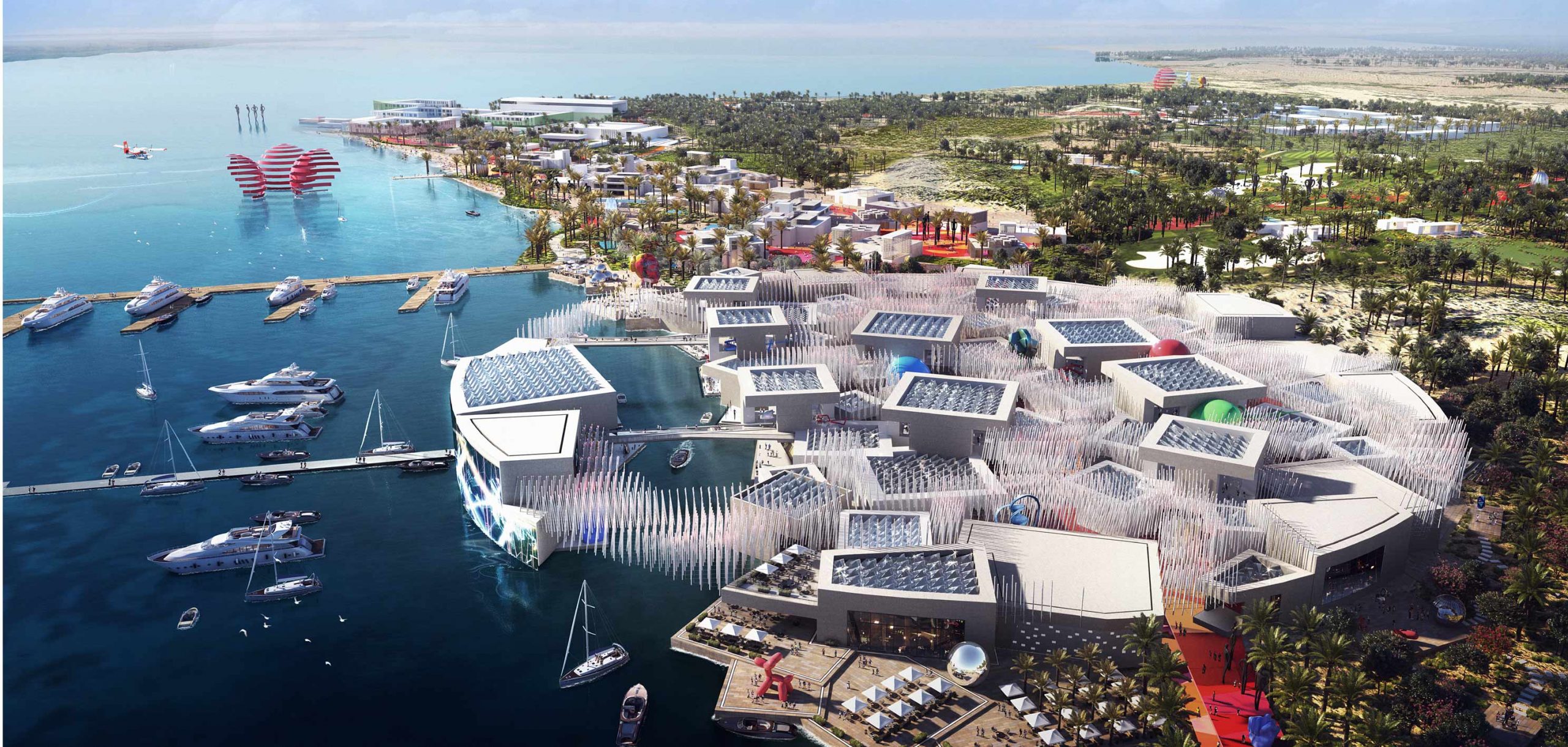
The Amaala Project in Saudi Arabia is a huge mega-development that is a component of Saudi Arabia’s Vision 2030 plan to redefine the concept of luxury tourism on the far northwest coastline of the kingdom bordering the Red Sea. This project encompasses stunning islands and beaches, as well as awe-inspiring desert environments, and will provide ultra-luxury hotels and resorts, health and wellness retreats, intelligent city infrastructure systems and marine tourism hubs.
A comprehensive and advanced infrastructure network designed with HDPE ducts, PVC conduits, corrugated pipes and microduct system provides the essential elements needed to ensure the success of this project:
- Seamless fibre optic connectivity to the intelligent resorts
- Positive and dependable electrical distribution systems
- Effective water/wastewater management
Construction Companies & EPC Contractors
The Amaala Project Saudi Arabia brings together top-tier EPC and construction companies:
| Company | Role in Amaala Project |
|---|---|
| Amaala Company | Project developer & master planning |
| Public Investment Fund (PIF) | Funding and strategic oversight |
| Saudi Binladin Group | Civil and utility construction |
| El Seif Engineering Contracting | EPC contractor for utilities |
| Al Bawani | Civil and mechanical works |
| Archirodon | Marine infrastructure & civil works |
| Parsons Corporation | Smart city & telecom consultancy |
| Jacobs Engineering Group | Infrastructure and digital network planning |
Installation of utility networks, underground duct networks, fiber backbone networks, and luxury resort infrastructure takes place at an organizations or contractors’ premises, meaning a supplier is responsible for selection, testing (for specification compliance) and conformance to local regulations (e.g. Saudi Arabia). Ultimately, the success of the project depends on which organization or contractor performs all of these tasks accurately.
Pipe Usage in Amaala Project
Pipes made of High-Density Polyethylene (HDPE).
Typical Application for HDPE Pipe:
- Main FTTx Fiber Optic Backbone Protection
- Electrical Conduit
- Water and Wastewater Pipe.
Hdpe Pipe Products:
Hdpe Duct: (Main Ducts) 110mm To 315mm (4” – 12”)
- Material: Pe80/Pe100
- SDR: Sdr11, Sdr13.6, And Sdr17.
- Pressure Rating: PN10 to PN16
- Standards: ISO4427, Iec61386
- Use: Fiber Optic Networks And Utility Ducts.
Hdpe Microduct System (7/5.5mm To 32/28mm)
- Application: FTTX Networks, Smart City, And Airport/ Resort Fiber Continuity.
- Features : Coloured To Identify Their Use and Low Friction Inner Layer for Fibre Blowing.
Corrugated Hdpe Duct
- Application: Road Crossings, Desert Terrain, and Coastal Installations.
- Features: SN4/SN8 Ring Stiffness, Double Wall Construction, Impact and Abrasion Resistant.
PVC Conduits
Applications:
– Electrical networks with low voltage.
– Telecom cabling in resorts, marinas, smart city areas, etc.
– Utility corridors and duct banks.
Specifications:
– Diameters of (110mm), (160mm).
– Fire-retardant grades.
– Heavy duty-rated class.
– Complies with IEC 61386.
PVC conduits are lightweight, inexpensive, and suitable for underground installation without pressure; therefore, ideal for luxury tourism.
Other Pipe Systems & Accessories
- Duct spacers: keep several ducts aligned together within a duct bank.
- Elbow and Coupler fittings: connect pipes and change directions of flow.
- Pulling grips and Ropes: help install both fiber cables or electrical cables.
- Manholes and Joint boxes: allow access to a duct bank for maintenance or splicing of fiber cables.
These products are essential components used to protect fiber from damage, manage cable, and provide for long-term product life.
Standards & Compliance
Mega projects in Saudi Arabia like Amaala Project require strict adherence to international and Saudi standards:
International Standards:
ISO 4427 (HDPE pipes for water)
ISO 4437 (Gas PE pipes)
ASTM D3035 (HDPE pressure pipes)
EN 61386 (PVC conduits)
IEC 61386
Saudi Standards:
STC-approved HDPE ducts for telecom
SASO certification for PVC & HDPE
SEC-approved electrical standards
Civil Defense fire safety regulations
Suppliers must provide factory test certificates, material traceability, compliance documentation, and installation manuals to ensure long-term reliability.
Integration into Smart Infrastructure & Luxury Tourism
By combining smart city technology with high-end tourism, The Amaala Project offers several key integrations:
– Fiber Backbone Networks (HDPE Main Ducts) – Safe and secure delivery of fiber optic networks through main duct infrastructure to resorts and across airports and marinas.
– FTTx Microduct Networks – To deliver IoT (Internet of Things), smart sensors and high-speed connectivity.
– Electrical Conduits (PVC) – For low voltage systems within hospitality and recreational zones.
– Water and Waste Water Pipelines (HDPE and PVC) – For desalination, irrigation, and resorts.
Proper integration will ensure that the systems function as needed, will continue to be scalable, and will be in compliance with Saudi Arabia’s Vision 2030 objectives.
Sustainability and Environmental Considerations
- The materials used to make HDPE and PVC can be recycled.
- Pipes that are resistant to corrosion and stable against the effects of UV radiation will require less maintenance.
- Long-lasting products will reduce the carbon footprint of the lifecycle.
- These products support luxury resorts with a regenerative tourist infrastructure.
With these factors, Amaala will fulfill the sustainability and environmental benchmarks for mega-tourism projects.
How Saudi Ducts Supports Contractors & Developers in the Amaala Project Saudi Arabia
The Amaala Project in Saudi Arabia is regarded as one of the country’s most exciting new luxury tourism and smart infrastructure projects, which means that there will be significant demand for high-quality HDPE ducts, PVC conduits, corrugated pipes and microduct systems. In order to meet demand, contractors, EPC companies and infrastructure developers need to source compliant materials that are also delivered on time and have long-term durability. That is why Saudi Ducts is such an important partner.
Saudi Ducts is a specialized business-to-business (B2B) technical information and supplier discovery platform connecting contractors and developers with manufacturers that are certified, approved, and reliable within Saudi Arabia and throughout the Gulf Cooperation Council (GCC). As it relates to the Amaala Project in Saudi Arabia, Saudi Ducts will provide all the necessary support in several key areas:
1. Supplementing contractors with recognized suppliers
Sourcing STC-approved HDPE ducts, PVC conduits, corrugated pipes, and microduct systems for a mega-project like the Amaala Project Saudi Arabia can be complex. Saudi Ducts maintains a curated database of certified and registered suppliers, ensuring that contractors only engage with trusted vendors. This reduces procurement risk, guarantees compliance with mega-project specifications, and ensures that infrastructure installations meet the highest standards of quality and durability.
2. Providing Contractors and Developers with Technical Product Knowledge
Saudi Ducts provides contractors/developers with important technical information about all pipe systems to be used on the Amaala Project in Saudi Arabia; including:
- HDPE ducts (PE80/PE100), SDR11/SDR17, PN10/PN16, and ISO 4427 compliant
- PVC conduits, IEC 61386 compliant, fire retardant and for electrical and low voltage networks
- Corrugated duct type (SN4/SN8) will be selected based on the type of terrain (Desert or Coastal) that is encountered
- Micro-duct systems that are bundled by color coding for FTTX or Smart City applications.
The above ensures accuracy of planning, verification of design and eficient insulating which will reduce the potential of costly errors when executing the project.
3. Ensuring Compliance with Standards
For the Amaala Project Saudi Arabia, there are numerous international and local standards that the contractor needs to follow in order to conform to project specifications. The contractor is responsible for ensuring that materials are compliant with the requirements of the project, which include various types of international standards (ISO, ASTM, IEC), as well as the local Saudi regulatory standards (STC, SASO, SEC). In this regard, Saudi Ducts provides guidance for contractors when choosing approved not only pipe systems, but also accessories. This guidance includes providing:
– factory test certificates
– verification of the quality of materials
– traceable compliance documentation
Complying with these guidelines will help EPC contractors obtain faster project approvals from government agencies and decrease any delays that might occur, which will result in a longer-lasting, more reliable civil infrastructure.
4. Accelerating Procurement and Reducing Delays
By utilizing Saudi Ducts, contractors can easily:
– Compare multiple suppliers in one location
– Request technical datasheets and compliance documentation
– Develop a shortlist of qualified suppliers for FTTx, electrical, and water infrastructures that can be used during the design phase for the Amaala Project
As a result, using this streamlined approach to procure materials will speed up the procurement process, expedite deliveries of material to the job site, and ultimately shorten the duration of construction for a project of the luxury tourism scope of Amaala.
5. Smart Infrastructure and FTTx Development
The Amaala Project in Saudi Arabia has a high digital footprint and smart city infrastructure, such as:
- Fiber optic networks protected by HDPE duct
- Microduct systems for IoT devices, sensors, and smart meters
- Fiber-ready conduits for resorts, marinas and airports
Developers and EPCs use Saudi Ducts to deploy, expand and comply with the Smart City Infrastructure of the Amaala project, creating a safe, technologically advanced and luxurious tourism destination.
6. Mega Project Pipe Solution Knowledge
Saudi Ducts uses consultation to provide input on:
- Pipe diameter and material for desert and coastal installations
- Multi-duct configurations to facilitate fiber expansion
- Corrosion resistant materials for marine areas
- Environmentally sustainable and recyclable pipe materials that help achieve the environmental goals of the project.
All HDPE ducts, PVC conduits, and corrugated pipes that are installed at Amaala Project Saudi Arabia shall be designed to maximize long-term performance, safety, and sustainability of the project.
Conclusion-Amaala Project Saudi Arabia
The Amaala Project is the first in the world to set the benchmark for PLANNED / luxury tourism, smart infrastructure and sustainable development for the tourism industry. The backbone of these planned resorts, marinas and smart city zones will be provided by the use of HDPE ducts, PVC conduits, corrugated pipes, microduct systems and other various materials that are reliable for providing fibre commitment, electricity networks and supporting water infrastructure requirements.
To ensure they are in alignment with international standards (ISO, ASTM, IEC) as well as complying with local Saudi standards (STC, SASO, SEC); all developers in the Amaala Project have secured assurance of their long-term performance and safety.
Saudi Ducts is providing EPC contractors and developers with support through the provision of technical insight and connections to suppliers and guidance in the relevant standards, thus enabling the Amaala Project to achieve its ambitious milestones in an efficient and sustainable manner.
Frequently Asked Questions About the Amaala Project Saudi Arabia
What is the Amaala Project Saudi Arabia?
A giga-development for luxury tourism, smart cities, and sustainable infrastructure along the Red Sea.Which pipes are used in Amaala Project?
HDPE ducts, PVC conduits, corrugated pipes, microduct systems, and water pipelines.Why HDPE pipes?
They are flexible, UV-resistant, corrosion-resistant, and have long service life.What standards are followed?
ISO 4427, ASTM D3035, IEC 61386, STC-approved, SASO-certified, SEC standards.Who are the main contractors?
Amaala Company, PIF, Saudi Binladin Group, El Seif, Al Bawani, Archirodon, Parsons, Jacobs.What is SDR in HDPE pipes?
Standard Dimension Ratio defining wall thickness relative to pipe diameter.How are microducts used?
For FTTx fiber networks, smart city IoT devices, resorts, and airport connectivity.What are corrugated ducts used for?
Protection in desert and coastal areas, road crossings, and flexible routing.What is PVC used for?
Electrical conduits, telecom lines, and low-voltage distribution networks.How does Saudi Ducts support contractors?
By connecting them with certified suppliers and providing technical guidance.Does Saudi Ducts sell pipes directly?
No, all transactions are between buyers and suppliers.Why is proper pipe selection critical?
Prevents fiber damage, electrical failures, and reduces maintenance costs.Can Saudi Ducts support FTTx projects?
Yes, via microduct bundles, joint boxes, and fiber-ready conduits.Are all suppliers verified?
Yes, only certified and approved manufacturers are listed.How does this align with Saudi Vision 2030?
Supports sustainable, compliant, and smart infrastructure for luxury tourism mega-projects.