
- By Saudi Ducts Team
- April 15, 2026
- 0 Comment
Sedra Project Saudi Arabia: Residential Infrastructure, Utilities, and Smart Community Development
Introduction to the Sedra Project Saudi Arabia
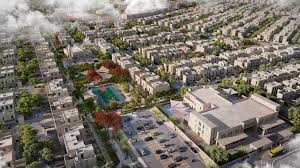
Sedra Project Saudi Arabia- The Sedra project, which will be one of the largest residential developments in Saudi Arabia, is managed by the ROSHN Group—a company owned by the Public Investment Fund (PIF)—and has been created to support home ownership and implement the Kingdom’s housing strategy under Saudi Vision 2030.
Sedra will be a fully planned urban residential community that will include:
– Residential homes consisting of villas, townhomes, and apartments
– Roads, other means of transport, and associated infrastructure
– Water supply and wastewater systems
– Electrical power distribution systems
– Telecommunications backbone from fiber optic cable
– Stormwater management system (drainage) and irrigation system
– Public amenities such as schools, mosques, parks, and open spaces
The number of housing units at Sedra will be in the thousands, resulting in an extensive utility infrastructure, and thus selection and installation of pipe, conduit, and duct systems is one of the most important considerations for engineers on this project.
Large residential developments like Sedra will utilize flexible high density polyethylene (HDPE) pipe, PVC conduit, rigid corrugated drainage pipe, and telecommunications conduit to provide long-term durability, safety, and compliance with Saudi construction codes.
Role of Pipes in the Sedra Project Infrastructure
A piping system is a vital part of the functioning of today’s living spaces. In the case of the Sedra project, the piping provides the foundation for utility services which deliver daily needs as well as for the operations of infrastructure.
Core Utility Systems Utilizing Piping
1. Potable Water Distribution
Potable water systems carry treated water from the water supply system’s source, typically municipal reservoirs, to residential buildings. All of these piping systems must be installed using pipes designed for the pressure rating needed to maintain a constant water flow, preventing contamination throughout the distribution system.
Typical requirements:
- Pressure-resistant pipe
- No leaks at pipe connections
- Long-term service life
- Must meet drinking water quality standards
Typical piping material:
High-density polyethylene (HDPE, sometimes referred to as PE100)
2. Wastewater and Sewer Systems
Sewage is transported from residential households to wastewater treatment plants through pipelines manufactured from various types of pipe materials. These pipelines must withstand a constant flow of wastewater as well as resist chemical corrosion that occurs due to the presence of waste chemicals in the effluent stream.
Performance Requirements:
- Chemical Resistant
- Smooth Internal Surface
- Structural Resistance
- Prevent Leakage
Types of Pipe Materials:
- Sewage PVC-U Pipe
- Gravity HDPE Pipe
3. Stormwater Systems and Drainage Systems
Stormwater systems are designed to prevent flooding, by directing water that falls during precipitation or other means away from buildings and road surfaces
Typical stormwater system infrastructure:
- Surface drainage
- Underground storm sewer pipe system
- roadway culverts.
Common materials for stormwater system pipes include:
- HDPE flexible pipe
4. Electrical Conduit Systems & Telecommunications Conduit Systems
Electrical power cables and fibre optic cable bundles need protection against moisture and pressure from soil. Electrical cables and fibre optic cables must also be protected from damage should a traditional installation method be used. Conduits provide such protection and provide access when maintaining your conduits.
Common materials for electrical conduit and telecommunications conduit systems include:
- PVC Electrical Conduit
- HDPE Telecommunications Duct Work
- Microduct Systems (for fibre optic networks).
Types of Pipes Used in Sedra Project Infrastructure
Infrastructure engineers select pipe materials based on performance requirements, environmental conditions, and regulatory standards.
1. HDPE Pipes (High-Density Polyethylene)
The use of HDPE pipe in the present-day infrastructure is prevalent because of its long-lasting, flexible, and corrosion-resistant properties.
The following are examples of where this type of pipe may be commonly installed or used within sedimentary environments:
– Water distribution system
– Irrigation systems
– Sewer systems
– Telecommunications
– Natural gas distribution systems
HDPE pipes possess the following technical characteristics:
Material grade:
- PE100
Typical working pressure ratings:
- PN6
- PN10
- PN16
Size range:
from 20 subject to 1200
Expected lifespan: 50 – 100 years under standard operating parameters/conditions;
Methods of installation:
- Butt fusion welding
- Electrofusion welds
- Mechanical couplings (i.e. used for maintaining and installing connections)
Applicable standards:
ISO 4427 – Specification for plastic pipe systems for distributing potable-water;
EN 12201 – Specification for polyethylene pipe systems for distributing potable-water;
ASTM F714 – Specification for polyethylene pressure-pipe; and
Saudi Aramco Engineering Standards (SAES).
2. PVC Pipes (Polyvinyl Chloride)
Due to their lightweight nature and resistance to corrosion, PVC plumbing is a popular choice for sewer, drainage and electrical conduit applications.
Some standard applications include:
– Sewer/wastewater systems
– Conduits for electrical cables
– Irrigation pipelines
– Systems for drainage of buildings
The properties of PVC pipes are:
– PVC-U (Unplasticized)
– Diameter 20 mm to 400 mm
– Maximum operating temperature 0°C to 60°C
– Service life is usually 40-50 years.
Standards applicable to PVC pipes:
– ISO 1452 – PVC pipes for pressure applications.
– EN 1401 – Pipes for drainage applications.
– ASTM D1785 – Pipes for pressure applications.
– Saudi Building Code.
3. HDPE Corrugated Pipes
Corrugated pipes are intended for use in underground drainage and stormwater systems, needing to have a high level of structural strength and flexibility.
Some common uses of Sedra may include:
- Stormwater drainage
- Road culverts
- Utility crossing
- Cable protection systems
- Technical Characteristics
1. Material
- HDPE
2. Structure
- Double Wall Corrugated
3. Diameter Range
- 110mm – 1000 mm
4. Ring Stiffness
- SN4
- SN8
5. Service Life
- 50 Years
6. Relevant standards
- EN 13476 — Structured wall plastic pipes
- ASTM F894 — Corrugated polyethylene pipe
- ISO 21138 — Buried drainage systems
4. Microduct Systems for Fiber-Optic Networks
Modern residential communities rely on fiber-optic connectivity for internet, smart home systems, and telecommunications.
Microduct systems allow multiple fiber cables to be installed within a single duct network.
Typical Applications
- Fiber-to-the-Home (FTTH)
- Broadband internet
- Smart city infrastructure
- Telecom backbone networks
Technical Characteristics
Material:
- HDPE
Diameter:
- 5 mm to 20 mm
Configuration:
- Single or bundled microducts
Installation Method:
- Air-blown fiber technology
Relevant Standards
- ITU-T G.652 — Optical fiber standard
- ITU-T G.657 — Bend-insensitive fiber
- IEC 60794 — Optical fiber cable standards
Companies Involved in Sedra Project Construction
Large residential developments involve multiple stakeholders responsible for design, construction, and infrastructure delivery.
Developer
ROSHN Group
Primary responsibilities:
- Master planning
- Community development
- Residential construction
- Infrastructure coordination
Infrastructure and Construction Contractors
Saudi Binladin Group
Typical roles:
- Civil works
- Road construction
- Utility installation
Alfanar
Typical roles:
- Electrical infrastructure
- Power distribution systems
- Utility networks
Saudi Telecom Company
Typical roles:
- Fiber network deployment
- Telecom infrastructure
- Broadband connectivity
Installation Practices in Sedra Project
Proper installation practices are essential to ensure infrastructure reliability and long-term performance.
Site Preparation and Surveying
Initial site preparation and pre-installation surveys by engineers prior to installing any type of subsurface utility involve conducting:
1. Topographic surveys
2. Soil testing
3. Utility mapping
4. Route planning
Objectives of these pre-installation surveys are:
1. Identify any underground obstructions
2. Determine the required depth of the trench
3. Ensure the trenching operation meets the design specifications.
Trenching and Bedding
The excavation of trenches shall be performed in accordance with engineering requirements.
Typical trench specifications include:
Trench Depths:
- From 0.6 to 1.5 m depending upon the size of the pipe installed
Trench Bedding Materials
- Sand or fine aggregate shall be used
Purpose
- To provide proper support to the installed pipe
- To protect installed pipes from damage
- To provide proper alignment of installed pipes
Pipe Installation Methods
HDPE (High-Density Polyethylene) Tubing
Methods of Completion
– Butt Fusion Welding;
– Electrofusion Joints.
Benefits Offered
– No leaks
– High Joint Strength
– Long Lifespan of Pipes.
PVC (Polyvinyl Chloride) Tubing
Methods of Completion:
– Cementing with solvent cements;
– Joints with rubber rings.
Benefits Offered
– Simple to install;
– Efficiently seals joints.
Corrugated/Plastic (Pipes) Tubes
Methods of Completion
– Use of standard techniques for flexible placement;
– Use of graded backfill materials to maintain the shape of the pipe, prevent distortion.
Testing & Commissioning
Testing of all civil utilities must be completed prior to starting operation of utilities.
Common Test Types
– Pressure Tests
– Leak Tests
– Flow Tests
– CCTV Inspection of Sewerage Pipes.
Purpose of Testing is to verify:
– Integrity
– Safety
– Performance Level.
Standards Followed in Sedra Project Constructionb
nfrastructure projects in Saudi Arabia must comply with strict technical and safety standards.
International Standards
ISO Standards:
ISO 4427
ISO 1452
ISO 21138
ASTM Standards:
ASTM F714
ASTM D1785
ASTM F894
IEC Standards:
IEC 60794 — Fiber optic cables
Saudi Standards
Saudi Building Code (SBC)
Saudi Aramco Engineering Standards (SAES)
SASO regulations
These standards ensure:
- Safety
- Durability
- Environmental compliance
- Long-term performance
How Saudi Ducts Supports Sedra Project Infrastructure
Saudi Ducts plays a practical role in supporting infrastructure development projects by connecting contractors and engineers with verified suppliers and technical resources.
Accomplishing the Sedra Project will take much more than just constructing the civil portion; it will also require a reliable supply chain to provide infrastructure materials. The Sedra Project requires the use of HDPE ducts, PVC conduit, corrugated drainage pipe, and telecommunication microduct systems as part of a large residential community being developed for the ROSHN Group. Coordinating between contractors, suppliers, and utility providers must also occur regularly to ensure that all underground and aboveground infrastructure is completed on time and within engineering specifications.
Saudi Ducts provides a great deal of additional assistance to the Sedra Project by serving as a platform for technical information and supplier discovery for contractors, consultants and infrastructure developers who are attempting to complete either residential or utility projects in Saudi Arabia.
Centralized Supplier Discovery for Faster Procurement
The timely availability of certified infrastructure materials is one of the primary challenges in delivering large residential developments like Sedra. Obtaining timely supplies of pipes, ducts, and fittings directly impacts the construction schedule.
Saudi Ducts also facilitate this process by providing a single point of contact for the EPC contractors and subcontractors working on Sedra to identify verified manufacturers and distributors of:
– HDPE water and telecom ducts
– PVC electrical conduits
– Corrugated drainage pipes
– Microduct systems for fiber networks
– Telecommunication access and installation components
This allows EPC contractors and subcontractors to quickly find appropriate sources, thereby shortening the procurement cycle and increasing project efficiency.
Technical Guidance for Correct Material Selection
When choosing materials for infrastructure projects, such as pipe types used in water drainage systems, building codes and standards need to be followed. If the right type of pipe is not selected, it can result in long-term failure of the infrastructure because of the pressures being placed on it, soil conditions, etc.
Saudi Ducts provides engineers and planners with assistance through both technical support and access to products so they may select:
- HDPE PE100 pipe for pressurized water systems.
- PVC-U conduit for electrical and drainage systems.
- Corrugated HDPE pipe for use in stormwater management and road crossings.
- Microduct systems that are certified to be used in FTTH networks.
By providing this technical assistance, Sedra will be able to design its infrastructure in a manner that ensures compliance and durability as well as provide for future development.
Supporting Fiber-Optic and Smart Infrastructure Deployment
Modern day home developments are characterised by combining high speed fibre connectivity with smart infrastructure systems (examples would include Sedra).
By having access to telecommunications equipment for FTTx and telecom deployments, the Saudi Ducts product line supports this segment including the following:
– HDPE telecommunications duct system
– Micro duct bundle for fibre blowing
– Cable protection accessories
– Jointing & Coupling Systems
These components play a vital role in developing the backbone of a digital infrastructure that provides all telecommunications services including internet access, smart homes and future growth of smart cities like Sedra.
Ensuring Standards Compliance and Quality Assurance
There is a large number of regulatory procedures that must be followed when developing infrastructure in Saudi Arabia including: ISO standards, ASTM standards and requirements from the Saudi Building Code. Infrastructure that is created with materials that do not conform to these standards runs the risk of infrastructure failure, negatively impacting the safety of the public and in some cases resulting in rework costs that can be extremely high.
Saudi Ducts helps contractors to reduce risks by providing guidance on manufacturers’ products that all comply with:
- ISO 4427 (High Density Polyethylene [HDPE] piping for water supply distribution systems),
- ISO 1452 (PVC piping for pressure distribution systems),
- EN 13476 (Corrugated Polyethylene [PE] pipe for drainage systems),
- ASTM F714 and F1785,
Saudi Aramco Engineering Standards (as applicable).
By increasing the contractor’s knowledge of approved specifications and thus providing better assurance of quality will result in higher quality infrastructure construction throughout Sedra’s utility networks.
Improving Project Efficiency and Reducing Construction Delays
In large-scale residential projects, delays often occur due to:
- Material shortages
- Unverified suppliers
- Incorrect product selection
- Procurement inefficiencies
Saudi Ducts helps reduce these risks by enabling:
- Faster supplier comparison
- Direct communication with manufacturers
- Access to technical documentation
- Better planning of material requirements
This contributes to smoother construction workflows and helps ensure that Sedra Project infrastructure milestones are achieved on schedule.
Strengthening Telecom and Utility Infrastructure Integration
Building Sedra demands total connectivity of water, power, drainage and telecommunications systems. All these various systems will need to be located in underground corridors, without any interference or structural issues present.
To facilitate this integration, Saudi Ducts advocates for:
- Multi-utility ducting systems
- Proper trenching and separation standards
- Fiber-optic protection techniques
- Utility corridor planning solutions
These measures will guarantee that infrastructure systems in Sedra are effective today and adaptable for future growth opportunities.
Enabling Long-Term Sustainability and Smart Growth
Present day residential constructions are being built with sustainability efforts in mind. Sustainability can also be defined by looking at certain key areas of infrastructure:
Reduced ongoing maintenance needs
Energy-efficient utilities such as HVAC
Smart monitoring abilities
Ability to expand future networks
Saudi Ducts indirectly supports Sedra as they reach toward their larger goal; that is ultimately to be a Smart and Sustainable Community by providing improved access to high quality infrastructure materials and technical knowledge.
Final Impact on Sedra Project Execution
The Sedra Project is supported by Saudi Ducts through providing a link between all of the engineering requirements and having a reliable supply chain. Their involvement concludes with building:
• Efficiency in procurement.
• Accuracy within engineering.
• Compliance with standards.
• Reliability of suppliers.
• Quality of infrastructure delivery.
In doing so it helps to ensure that all residential and utilities on Sedra will be built to the highest infrastructure standards expected by the Kingdom as part of Vision 2030.
Conclusion-Sedra Project Saudi Arabia
Saudi Arabia’s Sedra Project takes a substantial step forward regarding infrastructure expansion & modern residential development throughout the Country. Reliable utility systems supported by properly designed & installed pipework will be key to the success of this project.
By utilizing high-quality materials such as HDPE pipes; PVC conduits; corrugated drainage systems; and fiber optic microducts, infrastructure developers can provide the long-term performance, reliability, safety and sustainability they desire for their projects.
Saudi Ducts provides vital assistance to help in the successful delivery of Sedra via supplier connections; technical support; compliance assistance, etc. as well as assisting infrastructure teams to meet their construction milestones efficiently and reliably.
FAQ – Sedra Project Saudi Arabia Infrastructure & Utilities
1. What is Saudi Arabia’s Sedra Project?
The Sedra Project will involve the construction – to a master-planned design – of a significant residential area that will provide modern homes and have efficient integrated utilities, roads and smart infrastructure. The development is undertaken in Riyadh by the ROSHN Group.
2. What types of infrastructure will be used for Sedra?
Sedra will include residential buildings and infrastructure for roads, water supply, sewerage, stormwater drainage, electrical grids and telecommunications with fibre optic networks supported by buried ducting.
3. What types of pipes will be used for Sedra’s infrastructure?
The most common types of pipe to be used are HDPE pipes, PVC pipes, corrugated HDPE drainage pipes and microducts used for telecommunication and fibre optics.
4. Why is HDPE used in the Sedra Project in Saudi Arabia?
HDPE Pipe is used for Sedra because it is resistant to corrosion, is flexible and has high impact resistance. Therefore, it is appropriate for use in the water supply main, sewerage system and telecommunication ducting in large residential developments.
5. For what purpose will PVC be used in the Sedra project?
PVC Pipe will typically be used for electrical conduits, drainage pipes and sewer lines. It is an established pipe material that provides low-cost, lightweight and long service life versus other alternatives.
6. What are the uses of corrugated pipe in Sedra Infrastructure?
Corrugated HDPE Pipe will be used for stormwater drainage, road crossings and underground protection of telecommunication cables; as this type of pipe is cost effective with high performance characteristics.
7. What purpose does the Micro Duct Systems serve within Sedra Project, and how will they assist in future expansions of the Fiber to the Home (FTTH) network?
Micro Duct systems are designed specifically for FTTH networks, facilitating the installation and future expansion of high-speed fiber cables without the need for further excavation.
8. What are the industry standards associated with piping systems for the Sedra Project?
Industry standards utilized include ISO 4427 for HDPE pipe, ISO 1452 for PVC pipe, EN 13476 for corrugated pipe, ASTM, and the Saudi Building Code.
9. Who is responsible for building the Sedra Project in Saudi Arabia?
The project is being developed by the ROSHN Group, with assistance from civil contractors, utilities, telecom operators, and engineering firms following the relevant Saudi infrastructure requirements.
10. What role does Saudi Ducts play in supporting the infrastructure of the Sedra Project?
Saudi Ducts connects contractors with qualified suppliers of HDPE, PVC, corrugated pipe, and telecom duct systems, while also offering technical support, guidance, and standard references to aid in project success.