
- By Saudi Ducts Team
- May 3, 2026
- 0 Comment
Royal Arts Complex Saudi Arabia: Cultural & Infrastructure Development
Introduction to the Royal Arts Complex Saudi Arabia
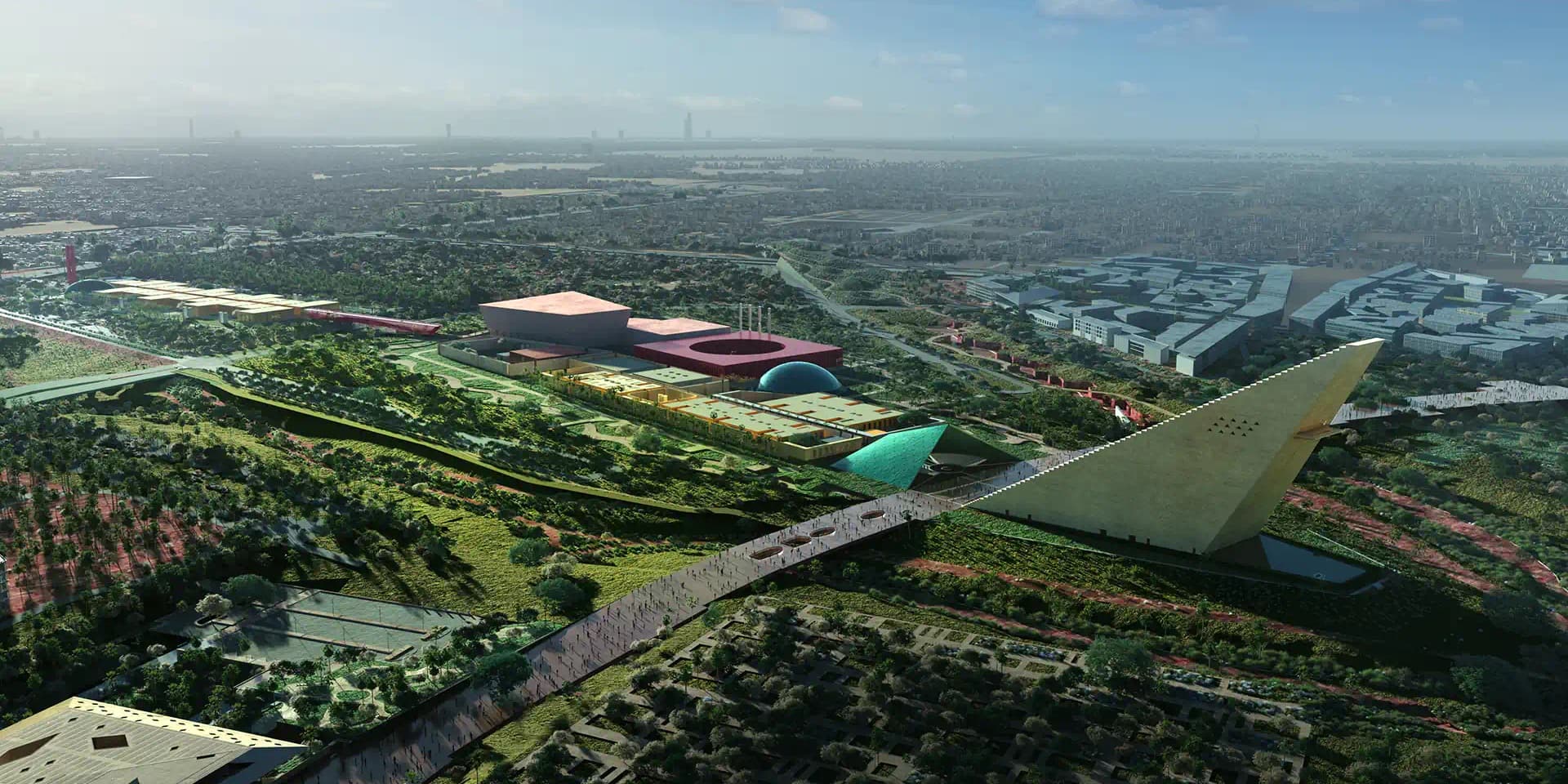
Royal Arts Complex Saudi Arabia- Royal Arts Complex will be a new cultural centerpiece within Saudi Arabia’s performance arts district in Riyadh and it will function as part of the larger Royal Arts Project which will transform the cultural landscape of Riyadh. Royal Arts Complex is located in Riyadh and will create an integrated cultural district in the capital, using world-class facilities, art, entertainment, and modern infrastructure.
Royal Arts Complex is part of Saudi Arabia’s Vision 2030 Strategic Vision, which seeks to diversify its economy; enhance the Saudi national identity, and; make Saudi Arabia a world renowned destination for tourism and the creative arts. Royal Arts Complex, unlike traditional cultural centers, will be a fully integrated urban infrastructure project that includes:
• Cultural museums and galleries
• Performance venues
• Creative studios and training facilities
• Public squares and outdoor entertainment areas
• Smart mobility system
• Underground public utility services
• Telecommunications with fibre optics.
• Storm drainage and waste management systems.
The integration of culture and infrastructure at Royal Arts Complex positions Saudi Arabia as a leading hybrid mega-project incorporating civil engineering, utility services and creativity.
Strategic Importance of the Royal Arts Complex Saudi Arabia
The Saudi Arabia Royal Arts Complex is not merely a place to enjoy culture; it is being built as a national development asset.
1 Changing Culture
The purpose of the project is to promote Saudi heritage and identity, facilitate cultural exchange, develop local creative talent, and provide a venue for global exhibitions and festivals.
Through this, Riyadh will become established as the cultural capital of the region.
2 Economic Diversification
In supporting the creative economy, this project will help grow tourism revenue, allow for private sector investment, create jobs in arts and entertainment, and develop creative industries.
3 Urban Infrastructure Enhancement
The project introduces:
- Smart city infrastructure
- Underground utility corridors
- Sustainable water systems
- Energy-efficient building networks
Infrastructure Systems in the Royal Arts Complex Saudi Arabia
The Royal Arts Complex in Saudi Arabia relies heavily on well-designed infrastructure systems to achieve operational efficiency and sustainability.
1 Water Transportation System
Water systems serve the following functions:
- Utilities for buildings
- Irrigation of landscaping
- Cooling systems for buildings
- Public facilities
HDPE pipes are commonly used for pressurized water systems because they are durable and leak-free.
2 Drainage and sewer systems
Drainage systems are designed to handle:
- Storm water runoff
- Disposal of wastewater
- Flood control
- Protection of the environment
- PVC and corrugated HDPE pipes are typically used for these types of systems.
3 Electrical Infrastructure
Electrical systems provide support for:
- Lighting
- HVAC systems
- Security systems
- Event infrastructure
- PVC conduit is used to protect underground electric cables.
4 Telecom and Smart Infrastructure
Modern cultural complexes require:
- Fiber-optic communication networks
- Surveillance systems
- Smart building automation
- Digital connectivity
Microduct systems are essential for telecom expansion.
Types of Pipes Used in the Royal Arts Complex Saudi Arabia
The Royal Arts Complex, located in Riyadh, Saudi Arabia, is a massive cultural and infrastructure project that relies on complex utility networks designed specifically for supporting all of the theatres, museums, galleries, public areas and smart buildings contained within it. To assist with the combined use of cultural architecture and sophisticated urban infrastructure, various piping systems were installed to provide reliable performance, long life expectancy and compliance with worldwide engineering standards.
In addition to performing multiple functions, piping systems within the Royal Arts Complex are selected to meet specific application needs, i.e. water distribution, drainage, electrical protection, telecommunications, irrigation and stormwater management. Each type of piping will contribute toward the overall successful functioning of the entire complex.
The following list shows the major piping systems used within the Royal Arts Complex.
HDPE Pipes (High-Density Polyethylene Pipes)
In the Royal Arts Complex’s infrastructure network, High-Density Polyethylene (HDPE) pipe materials perform critical roles since they are highly durable, flexible and resistant to chemicals or corrosion and have many uses within the underground utility networks.
HDPE Pipe Applications
- Potable Water Distribution Systems
- Irrigation Networks for Landscaping
- Water Cooling Circulation Systems
- Underground Utility Pipelines
- Telecommunication Protection Ducts
- Recycling Water Distribution Systems
Technical Advantages
- Extremely Resistant to Corrosion and Chemicals
- Fusion Jointing System Types that Create Leaks
- Flexible Enough to Move with the Ground
- Long Lifespan Up to 100 Years
- Low Upkeep
Typical Specifications
| Parameter | Specification |
|---|---|
| Material Grade | PE100 (HDPE) |
| Pressure Ratings | PN6, PN10, PN16 |
| Diameter Range | 20 mm to 1200 mm |
| Operating Temperature | –20°C to +60°C |
PVC Pipes (Polyvinyl Chloride Pipes)
In the Royal Arts Complex, PVC Pipe can be found in many aspects of non-pressure applications of the infrastructure. Therefore, PVC Pipes are cost-effective, lightweight & simple to install. Thereby, they are an ideal product for electrical and drainage systems.
Applications that use PVC Pipes
*Conduits for protecting electrical cables
*Sewage & Wastewater Drainage Systems
*Gravity fed water flow systems
*Utility Networks within Buildings
*Underground cable routing systems
Many Technical Advantages to PVC Pipes:
*PVC Pipes exhibit excellent resistance to chemicals
*PVC Pipes have a smooth inner surface promoting efficient flow
*PVC Pipes are lightweight and simple to install
*PVC Pipes are cost-effective for larger based projects
*PVC Pipes have a long-life span of operational use
Typical Specifications
| Parameter | Specification |
|---|---|
| Material Type | PVC-U (Unplasticized Polyvinyl Chloride) |
| Diameter Range | 20 mm to 400 mm |
| Temperature Resistance | 0°C to 60°C |
| Service Life | 40–50 years |
Corrugated HDPE Pipes
High-density polyethene pipes with a corrugated design are ideally built for drainage systems that need to operate effectively and efficiently under varying conditions of soil load and water flow. These types of pipes are utilized extensively throughout the Royal Arts Complex for stormwater discharge and underground drainage.
Applications:
* Stormwater drainage systems
* Rainwater management systems
* Underground flood control systems
* Drainage through roads or pathways
* Landscape water discharge systems
Technical advantages
* High stiffness of pipe rings to allow resistance to external loads
* Very flexible when subjected to soil loading
* A double wall design provides extra strength and greater flowing characteristics
* Resistant to damage from impact and environmental stresses
* Quick and easy to install when used in large-scale construction projects.
Typical Specifications
| Parameter | Specification |
|---|---|
| Material | HDPE (High-Density Polyethylene) |
| Structure | Double-wall corrugated |
| Ring Stiffness | SN4, SN8 |
| Diameter Range | 110 mm to 1000 mm |
Microduct and Telecom Duct Systems
The Royal Arts Complex is built with advanced technology, requiring a digital connection, thus utilizing fiber optic communication networks as part of their technological infrastructure via smart systems. Microduct systems are utilized within the Royal Arts Complex to house and protect fiber optic cables used for:
Microduct system applications:
– Fiber System Communications
– Smart Lighting System (Control)
– Security System (Surveillance)
– Building Automation Systems
– High-Speed Internet Connectivity Infrastructure
Microduct Systems Technical Advantages:
– Provides a tremendous amount of flexibility for network expansion
– Protects fiber optic cables from damage
– Allows for ease of installation into underground pipes
– Supports upgrade of future networks without needing to excavate
– Essential for smart city integration
Overall, Microduct systems keep the Royal Arts Complex – Saudi Arabia digitally connected and prepared for future requirements, allowing them to utilize advanced cultural technologies and smart infrastructure systems.
Ductile Iron Pipes (Supporting Utility Systems)
Although ductile iron pipe is not as widely utilized as HDPE or PVC pipe, ductile iron pipe is utilized in critical high pressure utility systems, where mechanical strength and long-term reliability are necessary.
Common Applications of Ductile Iron Pipe
Main Transmission Lines for Water Supply
Fire Protection Systems
Municipal Water Supply Systems with High Pressure Transmission
Key Advantages of Ductile Iron Pipe:
- Very high mechanical strength
- Long service life, even when subjected to high pressure
- Ability to be used in critical infrastructure zones
- Resistant to the forces of gravity and impact on the outside surface.
Companies Involved in Construction
The Royal Arts Complex involves multiple Saudi and international contractors.
1 Saudi Binladin Group
- Civil construction
- Structural works
- Infrastructure execution
2 Alfanar
- Electrical systems
- Power infrastructure
- Utility installations
3 Saudi Telecom Company
- Fiber-optic networks
- Telecom systems
- Communication infrastructure
Standards Followed in the Royal Arts Complex Saudi Arabia Construction
The engineering framework of the Royal Arts Complex in Riyadh, Saudi Arabia, for construction and infrastructure development provides stringent guidelines to achieve safe, durable, sustainable and long-lasting operational facilities. The construction of a Royal Arts Complex will include cultural facilities and advanced utility systems placed underground and will be subject to adherence to both international engineering codes and Saudi Arabia’s domestic construction regulations.
These regulations express in detail what is required of all phases of the project, including material selection, pipe manufacturing, pipe installation, and the commissioning of the infrastructure systems such as municipal water systems, garbage lines, electrical piping, telecom ducts, etc.
1. International Engineering Standards Applied
For its global quality infrastructure performance assurance, the Royal Arts Complex utilizes the internationally accepted standards used globally in large scale urban development projects.
ISO Standards (International Organization for Standardization)
The project is heavily reliant on ISO standards relative to the piping/utility systems, including:
• ISO 4427 – Polyethylene (HDPE) pipes for water supply system.
• ISO 1452 – PVC-U Piping systems for Water and Pressure Installations.
• ISO 4437 – Gas Distribution Pipelines (as applicable to Utility Zones).
These standards define the following:
• Material Composition;
• Pressure Rating Classifications;
• Dimensional Accuracy;
• Long-term Performance Testing;
• Jointing and Fusion Methods
ASTM Standards (American Society for Testing and Materials)
The ASTM global standards are utilized to monitor the quality assurance and functionality of construction material:
ASTM D3035 – High Density Polyethylene (HDPE) pressure piping specification
ASTM F714 – Large diameter high density polyethylene piping systems
ASTM D1785 – Polyvinyl Chloride (PVC) pressurised Piping requirements
ASTM F2306 – Structural specification for corrugated HDPE pipe.
As a result of these standards, all piping products used in the Royal Arts Complex will meet the appropriate global safety and performance benchmarks.
2. Saudi National Construction Standards
In addition to complying with domestic regulations, the Royal Arts Complex in Saudi Arabia is also subject to international codes.
Saudi Building Code (SBC)
The Saudi Building Code or SBC is the main set of regulations governing construction activities in Saudi Arabia. The SBC includes regulations detailing how buildings and infrastructure are constructed to comply with:
- Structural integrity of buildings and infrastructure
- Design of fire protection systems and their use for emergency response
- Design of electrical and mechanical systems
- Sustainable development principles.
SASO Standards (Saudi Standards, Metrology and Quality Organization)
SASO sets out the guidelines for the materials used to make an item and the level to which that product meets compliance. These guidelines include:
• Quality management systems for manufacturing pipe
• Pressure testing standards
• Material certification and durability
• Environmental standards for compliance
• Aramco Engineering Standards when they are applicable
Aramco Engineering Standards (Where Applicable)
The SAES (Saudi Aramco Engineering Standards) may also be referenced in some utility areas or in regions with a very high specification for:
• The installation methodology for pipelines
• Durability of materials when exposed to harsh environmental elements
• Safety parameters for high-pressure systems
How Saudi Ducts Supports the Royal Arts Complex Saudi Arabia
Achieving the Royal Arts Complex Saudi Arabia will require high-quality design and construction along with an appropriate procurement process to ensure material selection that is reliable and based on sound technical decision-making. This venue in Riyadh is a one-of-a-kind development in cultural and infrastructure terms; it will need high-quality pipe systems and telecom ducts, as well as utility infrastructure materials that meet and exceed engineering standards.
The capability of Saudi Ducts to provide solutions to all three parties (EPC contractors, consultants, and certification entities) enables Saudi Ducts to successfully connect each party through a single point of contact. As a result, Saudi Ducts‘ solution supports the continued growth of the infrastructure for the Royal Arts Complex in Saudi Arabia.
1 Supplier Search
Saudi Ducts offers contractors:
– A list of qualified suppliers
– A comparison of product specs
– A list of verified manufacturers
2 Technical Assistance
Assistance with:
– How to select the right HDPE pipe
– How to use PVC conduits
– How to design a telecommunications duct system
– How to meet Infra Standards
3 Procurement Productivity
Enhancing project execution through:
• Facilitating timely sourcing,
• Enabling availability of materials,
• Providing information for bulk procurement,
4 Telecommunications Infrastructure Support
Providing support for:
• Fiber Optic Deployments,
• Smart City Systems,
• Growth of Digital Infrastructure
5 Project Delivery Support
Assisting with:
• Accelerating construction schedules,
• Improving materials compliance,
• Reducing risks associated with projects.
Conclusion - The Royal Arts Complex Saudi Arabia
The Royal Arts Complex in Saudi Arabia is one of the largest new cultural infrastructure projects in the world. It will be an extraordinary destination that will combine artistic expression, engineering and technology and help build a unique cultural legacy for all people worldwide. This project features advanced utility systems, proprietary piping and smart city technologies that will set the benchmark for future projects in Saudi Arabia and bring together culture, engineering and technology.
As a result of the use of high-quality materials, such as HDPE, PVC and Corrugated Pipe, along with telecommunication ducting products that will provide long-term durability, this project will be very successful.
Saudi Ducts is actively supporting the discovery of suppliers and has provided technical support in the execution of the Royal Arts Complex in Saudi Arabia and achieved world-class performance levels in delivering a fully integrated structure and infrastructure.
FAQs – Royal Arts Complex Saudi Arabia
1. What is Saudi Arabia’s Royal Arts Complex?
The Royal Arts Complex of Saudi Arabia is a multi-faceted cultural and infrastructure venture with the goal of promoting the arts, tourism and creative industries throughout the Kingdom.
2. Where is Saudi Arabia’s Royal Arts Complex located?
It is situated in Riyadh, which is also the capital of Saudi Arabia.
3. What does the Royal Arts Complex of Saudi Arabia hope to accomplish?
The Royal Arts Complex will support the development of culture; help to elevate tourism; create and sustain an international platform for the arts and creative industries.
4. What types of piping are being used for the Royal Arts Complex?
There are different types of piping being used in the Royal Arts Complex project depending on the specific application, including: HDPE Pipe, PVC Pipe, Corrugated HDPE Pipe, and Telecom Microduct Systems.
5. In what way do HDPE pipes contribute to the Royal Arts Complex?
HDPE pipes have a long lifespan, are extremely flexible, are corrosion-resistant, and are great for utility systems.
6. What type of application is PVC piping used for in the Royal Arts Complex?
PVC pipes are generally used for applications such as drainage, electrical conduit or other non-pressure utility applications.
7. What are the applicable standard codes for the Royal Arts Complex?
The project will comply with international standards such as ISO, ASTM, and EN, along with the Saudi Building Code (SBC) and SASO regulations.
8. What are some of the significant construction companies participating in this project?
Some of the main contractors typically participating in this type of construction will be the Saudi Binladin Group, Alfanar, and several service providers.